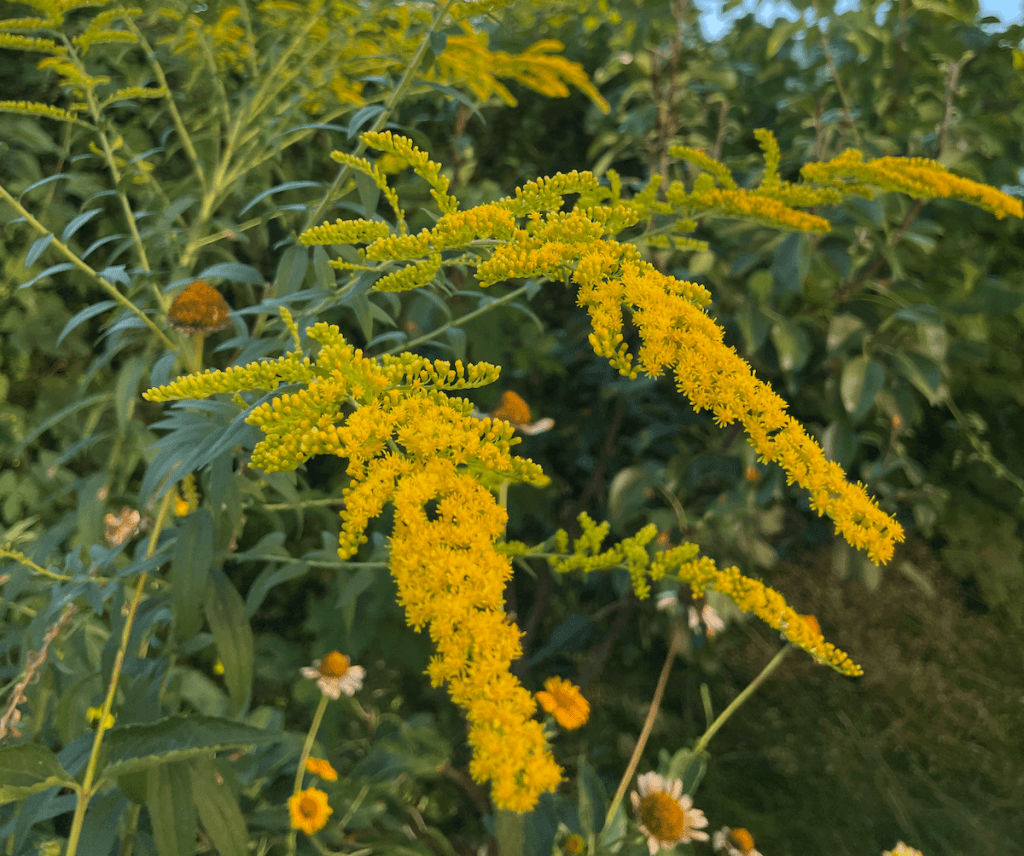
Open your garden gate and step into your garden. Go outside into nature and let your gaze wander.
Do you see the bright green of the grasses, the darker green of the tree leaves, the brown of trunks, branches, and dried stalks? In between, you find the colourful spots of flowers and blossoms, the vibrant red of wild berries, the deep purple of wild blueberries, and the shiny black of ripe blackberries.
Feel with all your senses how the wind brushes through the treetops and across the ground. Can you feel the gentle breeze on your face? Do you notice how the sun warms your skin?
With a bit of luck, you’ll see the sunlight softly dancing in front of you, moving gently in the wind. The yellow, cloud-like flower stems of the plants sway up and down, gently swinging from left to right and back again. The delicate leaves rest between your fingers. The light scent of summer and life rises to your nose. The bright yellow of the flowers ignites feelings of joy, lightness, and happiness.
You are standing right in front of a goldenrod.
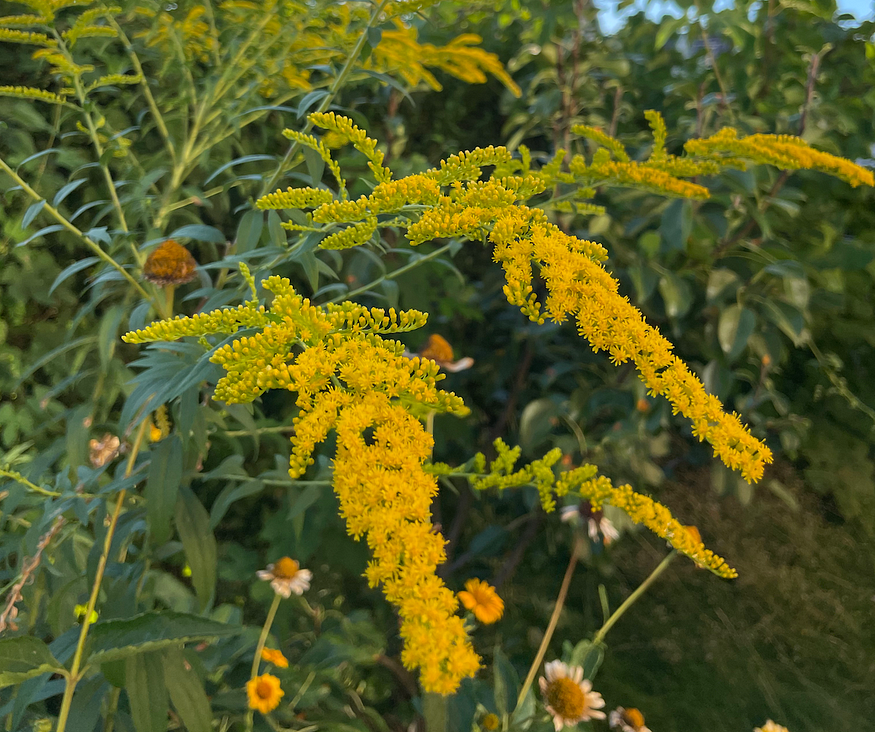
For some, the goldenrod symbolizes beauty, but for others, it’s a neophyte — an invasive species that can displace other plants, depending on the variant.
Goldenrod has been native to Europe for centuries. It is known as a hardy plant that requires little care. Traditionally, its blossoms were dried and used to dye fabrics. It has also been a sought-after medicinal herb throughout history and remains so to this day.
In the 17th century, the Canadian goldenrod was introduced to Europe. About 200 years later, it became one of the most popular garden plants, spreading more and more into the wild. Since it reproduces not only by seeds but also underground, the plant can spread quickly and aggressively, displacing other species of plants and grasses.
Discover the Power of Nature: The Hidden Magic of Goldenrod
Whether it’s our native species in Europe or the introduced variants, the plant itself boasts many positive properties that can benefit us. Goldenrod is especially known for its diuretic effect and is equally valued for its anti-inflammatory, antibacterial, and antispasmodic properties.
Whether in salves, tinctures, or teas, goldenrod is still widely used and appreciated today and is considered one of the most important medicinal herbs.
Traditionally, goldenrod was used as a cure-all. It was used to treat bladder infections, kidney ailments, menstrual cramps, or to heal wounds. It can also have a positive effect on the psyche, particularly in times of stress, anxiety, and shock. One could describe its effect as detoxifying, cleansing, and calming, helping us to let go, reduce inflammatory processes, and release negative energy and emotional tension.
We all have moments in life when we need comfort for the soul. If you feel the same way, I have the perfect recipe for you.
The Goldenrod Soul-Soothing Tea:
⏱️ Prep Time: 2 min
⏳ Steeping Time: 5 to 15 min
🫖 Suggested Pot Size: 250 millilitres (~ 1 size of your favourite cup)
🍵 Servings: 1 cup
Ingredients:
- 1 heaping teaspoon of loose, dried goldenrod
- 1 heaping teaspoon of a herbal tea of your choice (optional)
- 1 teaspoon of honey or lemon (optional)
Directions:
- Grab your favourite cup. Set the kettle on and wait until the water boils.
- Brew your tea with the hot water and let it steep for about 5–15 minutes. Feel free to place a plate or lid over your cup to keep the tea warm longer.
- Optionally, you can add a bit of honey or lemon.
Enjoy your tea and relax, knowing that your drink is strengthening, nurturing, and healing your kidney tissue, detoxifying and cleansing your body, flushing out inflammatory processes, and soothing your soul. With goldenrod, nothing will easily get to you!
There is a perfect little saying in German that expresses the tender relationship between the kidneys and psychology:
Das geht mir an die Nieren (litterally translated to: this affects my kidneys)
So don’t let the stress of life get to you. There has been extensive research conducted in the past couple of years, demonstrating that people with kidney disease are more likely to have some form of mental health problems.
Similarly, if your body enters the “fight or flight” mode as a result of stress, your body and your kidneys have to work so much harder. If the situation gets out of control, and you remain in constant fight or flight mode, may this be due to illness or anxiety, the constant exposure to stress hormones will put you at a higher risk of (mental) health problems.
You may not be able to immediately get out of your stressful situation. But you can do this: Breathe! Sit down and have some tea, while doing nothing. Then one thing is for sure: Tomorrow will come and go, Today is when it counts.
I hope you enjoy this deliciously healthy tea recipe that I crafted especially for you.
For more insights on herbal nutrition, subscribe to our blog for tasty recipes and health tips or spread the herbal love and share this post with people who matter to you.
– with love –
Corina
sown & uprooted @ https://for-a-better-living.com
Disclaimer: Please note — As with all things in life, some things will have ripple effects and the amounts make the difference. So please don’t overdose on herbal remedies either. Especially if you are on medication, suffer a medical condition, or are prone to allergic reactions and during pregnancy, it’s recommended to seek medical advice before starting any self-medication.

 sown & uprooted
Leave a comment