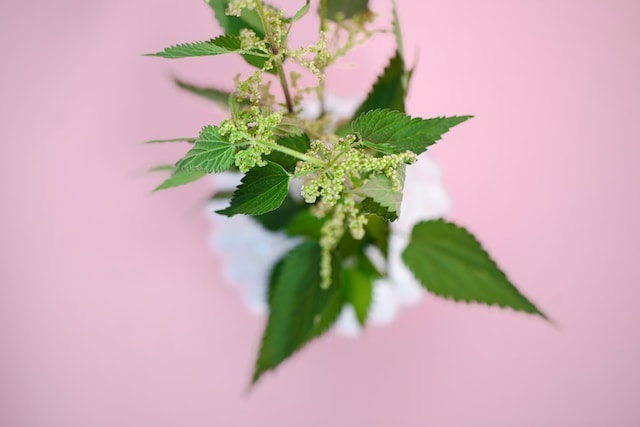
Nettles can be found everywhere. Wherever they grow, it indicates that the soil is rich in nitrogen, making fertilisers obsolete. But nettles can do so much more than pointing us to the right areas for growing our tomatoes, peppers, cucumber, cabbages and so forth. It contains many minerals and vitamins, it can also be used as manure for fertilising your vegetables and the manure can protect your plants from insects. If used consistently, nettle manure aids beautiful crop and vegetable results and supports strong and healthy plant grow with no chemical residues. It doesn’t get more organically than that!
But apart from its use in your garden, it is also a regional superfood. Best off all, it is one of the cheapest, versatile, regional superfoods available, which in many instances, is available for free.
In her post Naturally Nettlesome? A rejuvenating Tea treatment with anti-aging effects – my friend and co-author Lina has already written about the nettle and it’s underestimated healing properties.
The nutrition rich plant contains magnesium, calcium, potassium, iron, sulphur, zinc as well as silica and vitamins A, C, and K. In terms of calcium and iron it’s content are said to be higher than in common animal products like milk and red meat. Therefore making it a perfect substitute if you are aiming to reduce your intake of animal products to a climate friendly level. It’s seeds contain linoleic acid (an omega 6 source) and vitamin E (think healthy glowing skin!).
Because of its high content in iron it is often recommended when you feel tired, slow and exhausted – which can be caused by iron deficiency. The nettle is commonly used for detox as well as treating rheumatic illnesses. Recent studies have shown the nettle to have significant effects on preventing bladder infections, as well as having a positive effect on inflammatory bowel infections. It has also shown positive effects on the prostate and it has also shown remarkable antimicrobial activity against a wide range of bacteria. Definitely a plant that deserves more research efforts before its complex spectrum of healing properties is fully scientifically explored and validated.
While not a common ingredient on our plates today, especially during the war and post-war area it was consumed like any other vegetable. As with other „poor people’s food“ it simply fell out of fashion in prosperous times, and is now almost forgotten about or simply seen as evil weed the vivid gardener needs to get rid off. Nowadays, only few people know it as edible plant, and most likely it will have crossed your path in form of tea.
How to eat nettle:
- As a perfect substitute for spinach
- Flatten the leaves with a rolling pin to break the stingy hairs and add it to your salad
- Boil some tea, I highly recommend this tea for detoxing body and mind
- Add it to a pesto for pasta or bread and cheese
- Add the leaves to your omelette
- Add it to your smoothie
- Or use it as main ingredient for a lovely creamy soup (scroll down to read the recipe)
Apparently, when picking nettles there is a way to avoid skin irritation. As literature and documentaries describe it: they are best picked with an upward movement. That breaks off the sting hairs without getting in touch with the acid. It has never worked for me, so I simply use protective clothing when picking them.
Creamy Nettle Soup
For 4 portions of soup, you will need:
- 4-6 hands full of nettle leaves (young shoots and tips)
- 1 standard cup of full fat crème/creme fraiche
- 1 l of vegetable broth
- 1 garlic glove
- 1 small onion
- 1-2 potatoes
- 4-6 daisy flower heads
Chop the onion and garlic and roast for a couple of minutes. Add finely chopped potatoes and vegetable broth. Simmer until potatoes are done. Add nettle leaves and let it simmer for another 5 minutes. Add cream. Use a blender to blend all ingredients together. Add some salt and pepper to your liking. Garnish with daisy flowers.
Note: you can also garnish it with some deep fried bacon pieces or croutons
Bonne appetite!!!
– with love–
Corina
sown & uprooted
https://for-a-better-living.com
Please note: As with all things in life, some things will have ripple effects and the amounts make the difference. So please don’t overdose on foods either. It’s always advisable to observe how your body reacts to natural remedies. Especially if you are on medication, suffer a medical condition, or are prone to allergic reactions and during pregnancy, it’s recommended to seek medical advice before starting any self-medication.
 sown & uprooted
Leave a comment