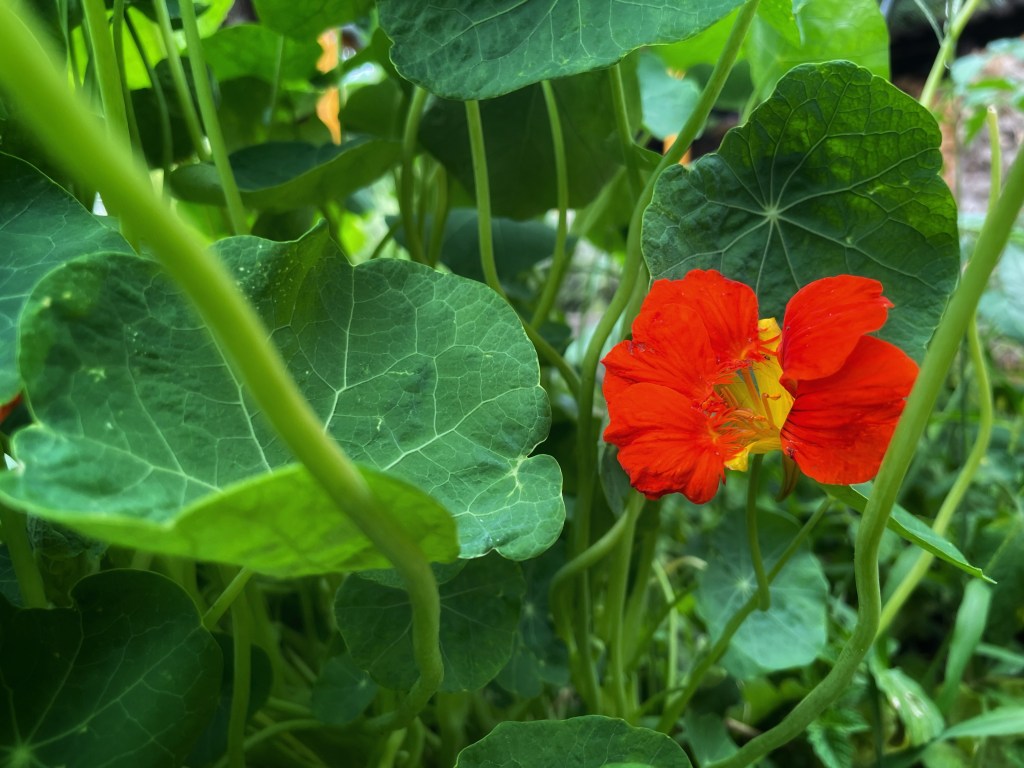
Every year, at the start of planting season, I am looking forward to cultivating one of my favourite edible plants – the nasturtium. The plant was introduced to the European continent in the late 16th century, when Spanish discoverers brought them with them from Peru.
Lucky for us, their seeds are easy to get hold of now and belong to one of those great value-for-your-money plants, particularly as those plants are self-seeders. This means that once you find the perfect spot, you no longer have to cultivate them again and again – at least if you live in milder climates. Further up north, you simply collect the seed pods once they start looking like a shrivelled pea and store them in an envelope, stashed away in a cool dry space.
Though, even if you start from scratch each year, they are very easy to grow, they need little care, they are almost indestructible, they flower early and continue to sprout flowers all year round especially if you nip off the flowers.
Last but not least, and for those who have been following our posts for a bit now – the plant is edible! They make a very tasty addition to salads or sandwiches.
In particular, the young leaves have a cress or radish-like, slightly peppery taste. The Latin word nasturtium is said to mean “nose-twister” because of its mustardy, tangy taste.
Older leaves have a slightly stronger taste and are a bit bitter, though I find them equally delicious.
Their flowers are less intense than the leaves, but make up for it with their radiant colour – transforming any dish into a piece of art.
The seedpods too are edible and also taste slightly mustardy. You can pickle them and use them as substitutes for capers. Dried you can put them in a grinder and use them as a peppery spice to add flavour and finishing touches to your dishes. The seedpods themselves contain relatively large amounts of vitaminC and sailors were known to carry them with them out on the sea to fight of scurvy.
All in all, the plant is probably best described as a salad vegetable and medicinal herb, essentially combining the best of both worlds. It’s is high in vitaminC, iron, copper and zinc to name a few. All the macro elements well known to have a positive effect on the immune system. Helping you to support your body and mind in times of stress and throughout the flue season. The gentle antibiotic effects of the plant, make them ideal for treating minor illnesses like sinusitis, colds and the early stages of a bladder infection.
The plant’s properties also have shown positive effects in reducing inflammation, due to its antiseptic, antifungal and antiviral components. It’s like a little pharmaceutical warehouse right at your fingertips.
Eaten, its essential oils and macro and micro elements benefit your system overall. But you can also crush the leaves and flowers and apply them to your skin especially if you suffer from yeast infection or have small wounds that need to be disinfected. Or how about you brew yourself a cup of tea to treat a sore throat.
You could also stuff the leaves and flowers in an empty bottle and fill it with a vodka of your liking. The longer the flowers infuse the vodka, the stronger the flavour will be. Surprise your friends and family next time they are over for a visit with your own brand of spirit.
My favourite way of eating them is to have the leaves as a solid salad based on freshly toasted bread together with a nice piece of cheddar.
All there is left for me to say is “enjoy”.
– with love –
Yours truly,
Corina
sown & uprooted
https://for-a-better-living.com
Please note: As with all things in life, some things will have ripple effects and the amounts make the difference. So please don’t overdose on foods either. It’s always advisable to observe how your body reacts to natural remedies. Especially if you are on medication, suffer a medical condition, or are prone to allergic reactions. During pregnancy, it’s recommended to seek medical advice before starting any self-medication.

 sown & uprooted
Leave a comment